
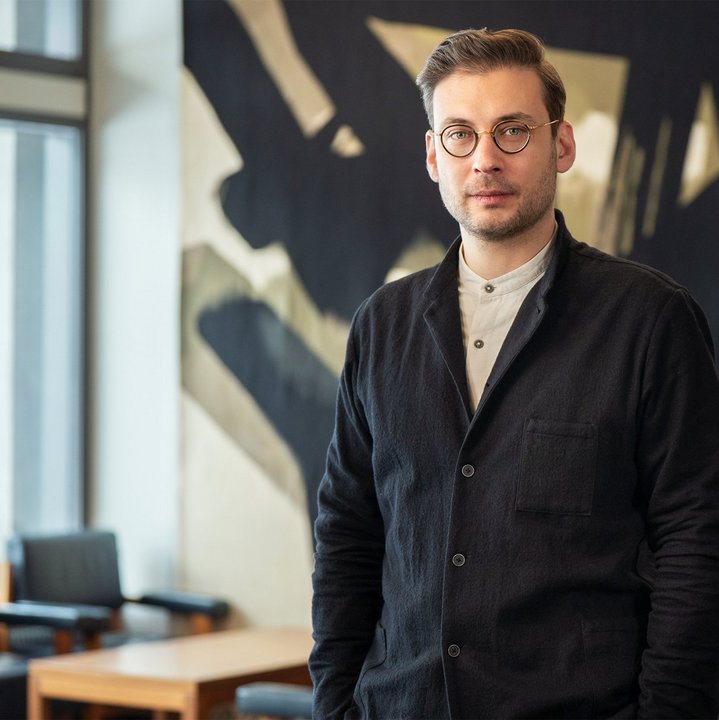
Our research connects organization studies with topics related to the management of strategy, technology, and sustainability. Our main research interests include (1) organization and management for sustainability, (2) technology and organization, (3) new forms of work and organization, and (4) organizational change and innovation. Our research has been published in the field’s leading international journals, such as Administrative Science Quarterly, Academy of Management Journal, Academy of Management Review, Journal of Management, Journal of Management Studies, Organization Studies, Organization, and Scandinavian Journal of Management.
Our research activities share a theoretical interest into the constitutive role of time and temporality in organizational processes and practices. Our "temporal research lens" foregrounds time as a fundamental dimension that shapes the behavior of organizations and their members in a subtle but profound way. We are and have been engaged in a number of empirical and conceptual projects on topics such as the negotiation of past, present, and future horizons, the constitution and change of temporal routines and structures, as well as the temporal coordination of routines in complex work settings.
The study of change and innovation in and around organizations constitutes a second important concern of our research. Change represents one of the most important and greatest challenges for organizations and their management, not least because change initiatives rarely achieve their intended results and often simply fail. Such failure, in turn, can threaten the very survival of organizations in light of changing environmental conditions. This fundamental tensions between the change and persistence of organizational structures, practices, and routines is a core concern in our research. We have, for example, explored the causes of organizational persistence as well as the possibilities of changing rigid, path-dependent structures and routines in private and public organizations.
How do organizations need to change to meet the grand challenges of the 21st century: climate change, digitization, dealing with the unexpected (such as the COVID-19 pandemic)? Our research in this area deals in particular with intertemporal tensions in business sustainability, that is with conflicts, trade-offs, and contradictions between present-day and future organizational demands. We are particularly interested in how organizations can shift from existing, predominantly near-future temporal orientations towards embracing a so-called distant future orientation, not least because such an orientation is essential for the implementation of ambitious sustainability strategies.
Over the last two decades, the horizon of possible forms of organizing has significantly widened. Think of open source communities, coworking spaces, or crowd-based organizing. According to many scholars, the established theoretical vocabularies of organization studies fail to keep up with these developments. Some of them even argue that organization theory is currently in a stage of crisis. Our research in this area critically examines this diagnosis and explores how new forms of organizing enable us to rethink organization. For example, we have empirically investigated the social rituals, routines and control mechanisms of coworking spaces, the organizational practices of open science communities, as well as the limits of self-manging organizations and less-hierarchical organizing.
Our courses provide in-depth knowledge of problem areas, theories, and instruments of contemporary organizational theory. They encourage students to take a critical and reflective approach to organizations and their management. Students also learn to identify and analyze organizational problems, develop theory-based solutions, and implement these solutions within existing organizational structures and processes.
At the Chair of Organization Studies, students of the University of St.Gallen can write their bachelor's and master's theses under the supervision of Prof. Blagoev. We look forward to your exciting topics and your interest in our professorship's focal points. On this website, you will find compiled information to prepare you for writing your thesis and to guide you during the writing process.
Director, Professor of Organization Studies
Office Manager, IT and HR
Doctoral Student & Research Associate
Great Minds Postdoctoral Fellow
Doctoral Student & Research Associate
Doctoral Student & Research Associate